
Student Posture: Sitting, Screens and Backpacks
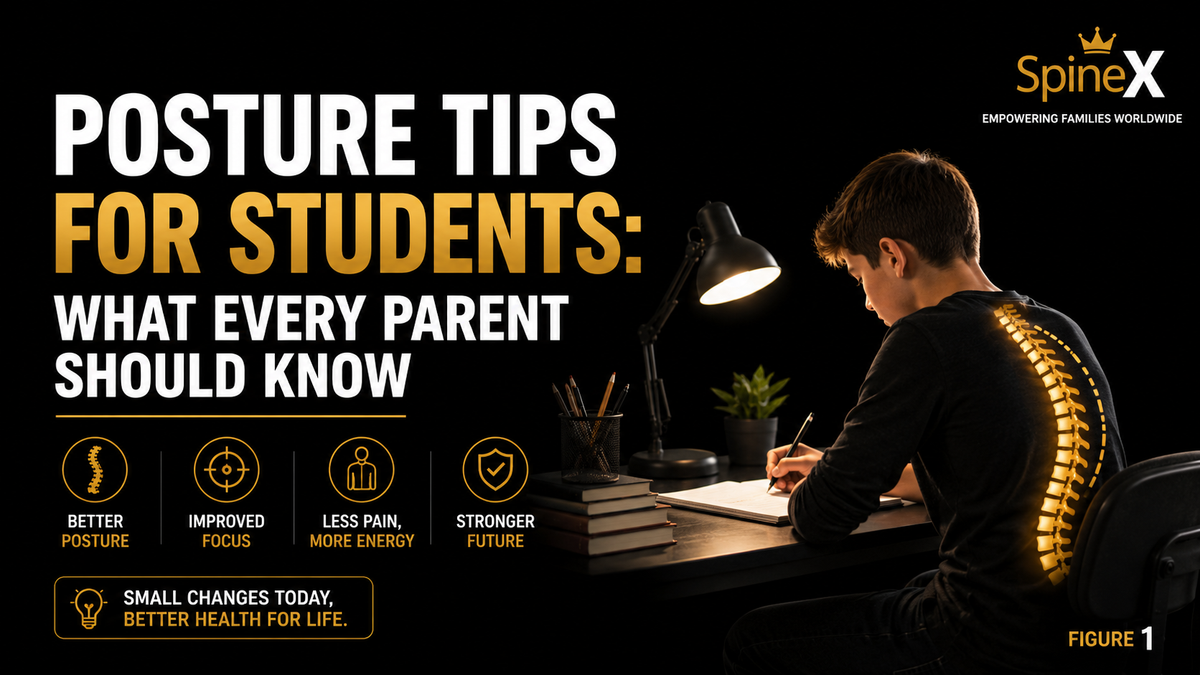
Student posture is best understood through daily demands, movement habits and strength—not repeated reminders to sit perfectly straight. Long periods at a desk, an uncomfortable screen setup and a heavy backpack can make the school day harder to tolerate. These are practical things families can review. They do not explain every spinal asymmetry or establish a scoliosis diagnosis.
Three school-day demands to review
1. Long periods in one position
A student may feel comfortable at the start of a lesson and tired later. Review when discomfort appears, how long the student stays in one position and whether the chair and desk fit. Changing position and taking movement breaks can make a school routine more manageable. The aim is comfortable movement throughout the day, rather than holding one rigid posture.
At home, arrange the desk so the student can reach the work surface comfortably, support the feet where needed and use the chair's back support. Adjust the setup to the person instead of asking them to fit an unsuitable desk.
2. Screens that are difficult to use comfortably
When a screen is too low or too far away, a student may spend a long time leaning toward it. Review screen position, text size and how the device is supported. A larger display or supported device may be easier to use than holding a phone for an entire homework session.
These adjustments change the task. They do not prove that a particular neck position has damaged the spine, and they do not replace assessment when symptoms persist.
3. Backpack load and fit
Check what actually needs to travel to school. Remove unnecessary items, use both shoulder straps and adjust the bag so it stays close to the body. If carrying it requires leaning forward or the straps cause discomfort, reduce the load and review the fit.
The American Academy of Pediatrics recommends keeping backpack weight below 15% of a child's body weight. This is a general guide, not a target to fill. A lighter load may be more appropriate for an individual child, particularly after injury or surgery. Read the AAP's backpack guidance.
Does poor posture or a backpack cause scoliosis?
Poor standing posture and heavy backpacks do not cause idiopathic scoliosis. The Scoliosis Research Society makes this distinction explicitly. Backpack comfort and sitting habits are worth improving, but parents should not be blamed for a child's spinal curve. See the Scoliosis Research Society's explanation.
Slouching, visible upper-back rounding and scoliosis are different presentations. A photograph can show how someone stands in that moment; it cannot establish the cause of an asymmetry or measure a spinal curve. New or persistent uneven shoulders, rib prominence or a change in spinal shape should be discussed with a qualified healthcare professional.
If your child has already received a diagnosis, start with what to do after a child's scoliosis diagnosis and the SpineX parents' FAQ.
A practical starting point for families
- Notice the pattern. Record which activities feel difficult, when fatigue appears and what improves comfort. Avoid judging progress from one photograph.
- Adjust one daily demand. For example, reduce unnecessary backpack contents or improve the homework setup. Review whether the change helps.
- Keep movement in the routine. Choose activity the student enjoys and can tolerate, following any medical restrictions.
- Build capacity progressively. Training should reflect the student's current movement control, experience, symptoms and goals.
- Reassess. Compare similar tasks under similar conditions and update the plan when the student's needs change.
For a closer look at the school environment, continue with posture tips for studying at home or school. For training decisions, read whether a teenager with scoliosis can lift weights at the gym.
Where the SpineX™ 3D Scoliosis Method fits
SpineX is a proprietary fitness-based scoliosis training system combining unilateral strength training, 3D de-rotation, individualized assessment, and fully personalized, progressive exercise programming.
For a teenager with scoliosis or visible movement asymmetry, the training question goes beyond sitting straighter. We consider posture, movement, muscular imbalance, training history, goals and available medical context before deciding how to personalize the work. Exercise sides, loads and progression are individual decisions.
The conceptual sequence is Decompress, De-rotate, Strengthen, Progress. The plan develops through assessment and reassessment rather than a universal list of corrective exercises. Learn how the SpineX™ 3D Scoliosis Method works.
Parents' questions about student posture
Should I keep telling my child to sit straight?
Start by understanding why the position is difficult to maintain. Desk fit, fatigue, comfort and movement capacity may all be relevant. A workable setup and an appropriate training plan provide more useful information than repeated reminders alone.
Can strength training be appropriate for a teenager with scoliosis?
It may be appropriate when the plan reflects the individual's presentation, experience and medical guidance. Supervision, technique and progression matter. Read the personalized programming FAQ for how SpineX makes those decisions.
When should we seek medical advice?
Do not assume persistent or worsening pain is simply poor posture. Arrange medical review for unexplained symptoms or a changing spinal presentation. New weakness or numbness, bowel or bladder changes, significant trauma, fever with back pain or breathing difficulty require prompt medical attention.
Understand the student before choosing the plan
If your family needs an individual training direction, book the Surgery-Avoidance Assessment. This live online service reviews the person's history, movement, posture and goals to help decide whether personalized SpineX training is appropriate. It is a fitness-based assessment, not a diagnosis or a promise of surgery avoidance.
About the author
Kamilio is the SpineX Founder and creator of the SpineX™ 3D Scoliosis Method. SpineX provides fully online, individualized fitness-based assessment and training for teenagers and adults internationally. Learn about the founder and SpineX.