
Can a Teenager With Scoliosis Lift Weights at the Gym?
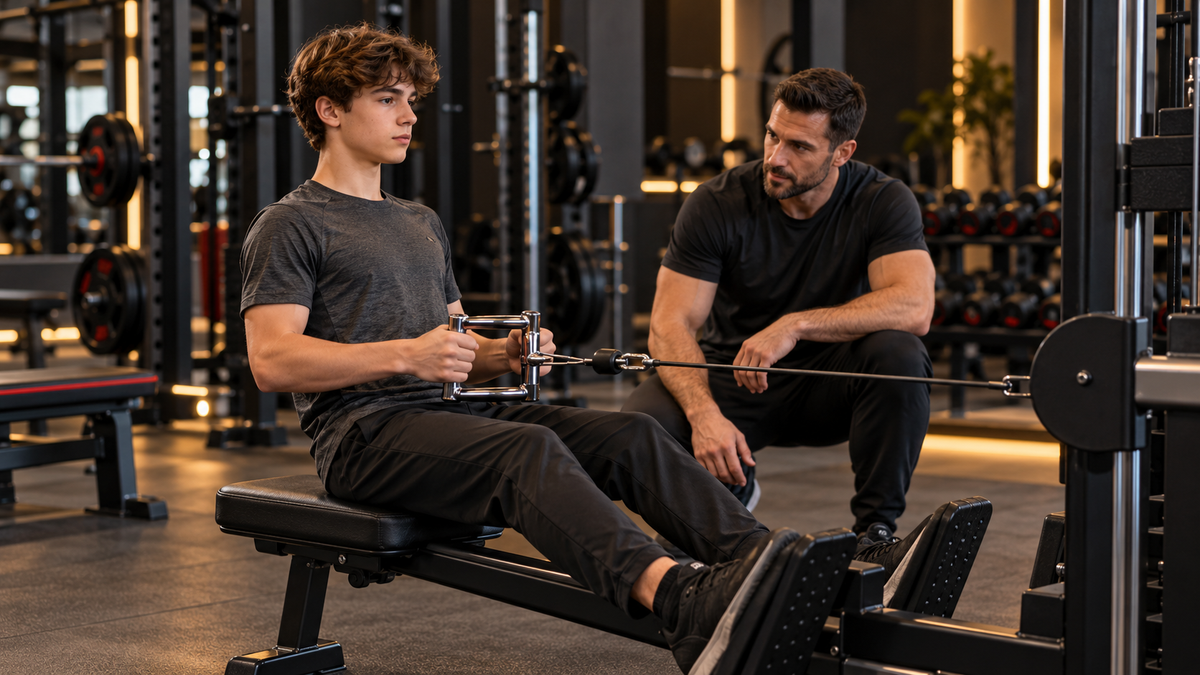
Yes—many teenagers with scoliosis can lift weights at the gym when training fits their medical guidance, movement control, experience and symptoms. A scoliosis diagnosis alone does not determine the right exercise, starting load or progression. The useful question is: what can this teenager control today, and how should that capacity develop?
A parent may worry that resistance will make the curve worse. A teenager may worry that a diagnosis means losing the chance to become stronger. Neither concern is answered by copying a friend's workout or avoiding every challenge. A clear plan connects medical context with practical coaching.
The SpineX™ 3D Scoliosis Method starts with individualized assessment, then develops personalized progressive exercise programming. This guide explains the decisions to make before the first gym session, what supervision should look like and how to judge progress without confusing strength gains with structural curve change.
Educational guidance for families, not individual medical clearance or a training prescription. Follow your teenager's healthcare team's restrictions. This article mainly concerns adolescent idiopathic scoliosis; other diagnoses and recovery after surgery require their own advice.

What does the evidence support?
The Scoliosis Research Society's guidance on living with scoliosis supports physical activity for children with scoliosis, subject to pain and individual medical instructions. That supports an active outlook. It does not clear every gym routine for every teenager.
The American Academy of Pediatrics' clinical report on resistance training, reaffirmed in November 2024, supports properly designed youth resistance training with qualified supervision and attention to technique. It reports no apparent adverse effect of appropriately designed programs on linear growth or growth-plate health. This is general youth evidence, not proof that a particular scoliosis program is suitable.
The 2016 SOSORT guidelines, published in 2018, distinguish ordinary sports participation from scoliosis-specific exercise. Their recommendations support remaining active, while recognizing individual clinical considerations. A general gym session and a personalized scoliosis-focused plan therefore have different purposes, even when both belong in the same week.
For a family, the practical implication is straightforward: ask for a reasoned training decision. Neither the word “scoliosis” nor the word “strength” provides that decision by itself. The relevant evidence informs the conversation; the teenager's presentation determines how the plan is applied.

What should you check before starting?
Start with what your teenager has already tried—and what is still missing.
Many families come to SpineX after physiotherapy, stretching or generic exercise programs have not delivered the progress they hoped for. They want a clearer explanation of their teenager’s movement, muscular asymmetries and training needs, followed by a personalized direction.
That is where the SpineX™ 3D Scoliosis Method begins: individualized assessment before exercise selection. We consider the teenager’s history, available imaging, symptoms, previous programs, movement control, visible rotation and current physical capacity. An X-ray provides useful structural context, but it does not determine the gym program by itself.
Next, establish their training experience, available equipment and ability to control the selected movements. Age alone does not determine readiness for greater resistance.
Finally, include the teenager’s own goals. Building strength, feeling more confident and enjoying the gym should help shape a plan they understand and want to follow.
Symptoms that change the plan
New, persistent or worsening pain deserves discussion with an appropriate healthcare professional rather than being dismissed as normal scoliosis. Stop an activity that provokes concerning symptoms. A coach cannot determine the cause of pain from a text message or a posture photograph.
Seek emergency medical help for new bladder or bowel dysfunction, numbness around the groin or saddle area, or severe or rapidly worsening leg weakness. These are warning signs requiring medical assessment, not exercise adjustment. See the NHS guidance on urgent neurological symptoms. Serious trauma, severe unexplained pain or breathing difficulty also requires prompt medical attention.
Why gym programming needs individualization
Two teenagers can have similar Cobb angles and very different training needs. One may lose trunk control as resistance increases. Another may remain controlled but lack confidence or tolerate only a limited range. The same exercise name tells you very little about those differences.
SpineX considers imaging context alongside posture, visible rotation, muscle imbalances, shoulder and pelvic behavior, movement, symptoms, training history and goals. Observation creates a working hypothesis about training needs. It does not diagnose a condition, directly measure every muscle's strength or reveal internal vertebral movement.
This matters when deciding how each side should work. Visible prominence is not a strength test. A concave side is not automatically weak, and a convex side is not automatically tight. Left-right selection, emphasis and dosage need adequate assessment rather than an internet rule.
For example, the unilateral seated lat row may be considered when independent side control serves the person's assessed goals. Whether it belongs in the plan, how the equipment is set and what each side does remain individual decisions. The exercise label is the start of a coaching conversation, not the finished prescription.
A useful plan explains what is being trained, what satisfactory technique looks like and what would trigger a change. If those answers are missing, a workout can be highly detailed yet still be generic. Personalization means the decisions have reasons that can be reviewed.

What should a useful first gym session look like?
The first session puts the personalized SpineX plan into practice at your teenager’s chosen gym. The goal is to learn the selected movements, establish suitable equipment settings and practice with manageable resistance—not prove strength immediately.
Follow the exercise demonstrations and individual instructions provided in the plan. Each movement should have a clear purpose, setup and technique focus based on the assessment.
Record technique videos from the requested angles so Kamil can review movement quality remotely. The footage should show the relevant body position and full movement clearly.
Your teenager’s feedback matters too. Share what felt controlled, what was difficult to understand and whether any movement caused discomfort. Video observations and personal feedback help guide adjustments.
Keep a simple record of equipment settings, resistance and technique priorities. That gives the next session a clear starting point and supports consistent progression.
How should exercise examples be selected?
There is no universal “best gym workout for teenage scoliosis.” SpineX may select from different tools after assessment, adapting selection, side, load, range, repetitions and progression. The examples below illustrate decisions, not a circuit to perform.
Independent upper-body work
A unilateral lat pulldown or unilateral seated lat row may allow separate observation and programming of each side. The coach can consider whether the teenager controls the task or compensates through an unwanted trunk movement. Independent loading makes different tasks possible; it does not prove that unequal volume is necessary.
Lower-body capacity
A unilateral leg extension or unilateral hamstring curl may be considered when the assessed goals include independent lower-body strength development. Machine fit, joint comfort, pelvic behavior and execution still need review. A supported machine is not automatically suitable just because it limits some movement.
Trunk control
A side plank, elbow plank or dead bug may be selected and adapted when relevant to the person's control goals. Position, difficulty and stopping point matter more than competing for a longer duration. A coach should change the task if the teenager cannot maintain the intended execution.
These seven examples are options within an individualized framework. A teenager may receive only some of them, different variations or a different emphasis over time. Do not choose a training side from this article, a curve label or another client's video. See our SpineX™ 3D Scoliosis Method FAQ for the principles behind assessment and programming.
How should training progress?
At SpineX, progression follows demonstrated control and tolerance. More resistance is one option. A more consistent range, better pacing, clearer positioning or more reliable execution can also represent progress. The teenager should understand what has improved before a new demand is added.
Change one important training variable at a time when practical. If resistance, volume and difficulty all rise together, it becomes harder to understand an unexpected response. A clear record helps the coach connect the change with what happened during and after training.
A useful review question is: can the teenager repeat the intended task without the technique deteriorating? If the final repetitions require increasing compensation, the current demand may need adjustment. Completing a number on a sheet is not more valuable than preserving the purpose of the movement.
Keep gym training within the whole week. School PE, sports, prescribed exercises, travel, exams and poor sleep can change what is manageable. The plan should be workable during ordinary life, including busy weeks, rather than depending on perfect conditions.
Monitor more than the weight used
Track attendance, confidence, technique consistency and the teenager's response, as well as resistance. A session note can be simple: what was performed, what changed, what felt different and whether any symptoms affected normal activity afterward. Unusual or worsening symptoms need appropriate review.
Comparable technique videos can support coaching. Use consistent camera angles and show the full task, with appropriate clothing and privacy. Ask for a new recording when a meaningful error needs checking, rather than turning every session into a filming obligation.
Stronger performance does not establish that a Cobb angle has changed. A posture photograph does not establish radiographic improvement. Medical follow-up evaluates structural progression; coaching reviews training behavior and capacity. Keep those outcomes distinct so genuine progress remains meaningful.
What about bracing, growth and medical follow-up?
A growing teenager may have a medical plan that includes observation, bracing or specialist discussion of other options. The purpose of gym training should be coordinated with that plan. Feeling stronger is not a reason to skip follow-up appointments or reduce prescribed brace wear.
Ask the treating team or orthotist how gym time should fit the prescribed wear schedule. Do not invent a universal rule about training inside or outside the brace. The answer needs to reflect the brace, the clinical instructions and the activity involved.
For a fuller explanation, read scoliosis bracing and individualized exercise. Bracing and strength development address different priorities. Neither should be judged by whether it performs the other's job.
This is where SpineX can provide an active fitness-based contribution: assessing movement needs, building a personalized plan and reviewing technique as the teenager develops. It complements appropriate medical care. It does not replace diagnosis, bracing decisions or surgical advice.
The conceptual sequence is Decompress, De-rotate, Strengthen, Progress. Selected preparation supports positioning; 3D de-rotation principles guide controlled organization; strengthening develops capacity; progression follows reassessment. This does not mean a drill permanently lengthens the spine or mechanically untwists vertebrae.
How can SpineX online support fit a gym routine?
SpineX is fully online and international. The first step is understanding the teenager's context and movement presentation. When personalized training is appropriate, programming can be designed around accessible equipment, schedule, goals and medical restrictions.
Online review needs adequate visibility. Camera position, lighting and a clear view of the whole movement influence what can be observed. If the recording cannot answer a relevant question, the coach should request a better angle or explain the limitation.
Remote guidance does not physically supervise a gym floor or prevent an equipment mistake in real time. A teenager who needs hands-on setup help or close supervision should have suitable local instruction. Online programming and responsible gym supervision can serve different parts of the same plan.
The Surgery-Avoidance Assessment is a live online fitness-based movement-assessment and decision-support service. It is not a medical consultation, a diagnosis, a complete personalized training plan or a guarantee that surgery will be avoided. A parent or guardian should attend for a minor.
If you need to decide how individualized training could fit your teenager's gym goals, book the SpineX Surgery-Avoidance Assessment. The current offer and any localized price are shown on the booking page.
A practical checklist for parents and teenagers
- Medical context: Share current advice, restrictions and relevant symptoms.
- Teenager's goal: Agree on something the teenager values, beyond appearance alone.
- Supervision: Identify who will observe technique and help with equipment.
- Individual plan: Know why each task was selected and how its demands were chosen.
- Starting record: Note settings, technique priorities and the response to training.
- Progression rule: Agree what needs to improve before difficulty increases.
- Review route: Know which questions go to the coach and which symptoms go to a clinician.
- Continuity: Keep medical monitoring and prescribed care in place.
Use this checklist to start a conversation, not to police every repetition. The teenager should feel able to say that something is confusing, uncomfortable or too difficult. Clear communication is more useful than hiding a problem to appear committed.
For broader questions about competition and activity outside the gym, see our guide to sports participation with teenage scoliosis. This article's focus is the gym decision: starting, supervising, individualizing and progressing resistance training.

Frequently asked questions
Does scoliosis automatically mean a teenager should avoid weights?
No. The diagnosis alone does not create a universal ban. Current medical advice, symptoms, training experience and task control determine the appropriate approach. A supervised individualized plan provides a more useful starting point than a general yes or no.
Is there a Cobb angle below which every gym exercise is safe?
No single angle provides blanket clearance. Cobb angle is relevant medical information, but it does not specify equipment fit, movement skill, symptoms or the demands of a particular task. Ask for advice that addresses the teenager's actual situation.
Should both sides always use the same resistance?
That depends on the assessed objective and execution. Unequal loading is not automatically better, and identical loading is not automatically wrong. SpineX uses assessment to decide whether sides need different tasks, doses or emphasis.
Can gym training straighten my teenager's spine?
Do not treat strength training as a promise of structural correction. Relevant goals may include strength, movement control, exercise confidence and physical capacity. Individual outcomes vary, and radiographic change requires appropriate imaging and qualified interpretation.
How heavy should my teenager lift?
There is no responsible universal kilogram recommendation. The starting resistance must fit the task, technique, equipment, experience and medical restrictions. Choose a demand the teenager can control and review the response before increasing it.
How often should a teenager with scoliosis go to the gym?
The schedule should reflect experience, tolerance, goals and total activity. Gym sessions need to fit around school, sport, prescribed care and recovery. A personalized plan should make that balance explicit rather than adding sessions automatically.
What if my teenager has already had spinal surgery?
Return to resistance training requires guidance from the surgical and rehabilitation team. Recovery stage, procedure and restrictions vary. This general article does not provide post-surgical clearance or replace a rehabilitation plan.
Does the assessment include an ongoing gym program?
The assessment is the entry service for understanding priorities and suitability. Ongoing coaching and a complete personalized program are separate unless expressly included in a verified offer. Clarify the service inclusions before purchasing.
Build a training direction around your teenager
A teenager with scoliosis deserves a route toward strength that respects the individual. That means knowing the medical context, choosing relevant tasks, coaching them properly and progressing for a clear reason.
The SpineX™ 3D Scoliosis Method combines unilateral strength training, 3D de-rotation, individualized assessment and fully personalized progressive exercise programming within a proprietary fitness-based framework. The method guides decisions; program durations are the products used to deliver it.
Start by understanding your teenager's movement and training priorities. Book the SpineX Surgery-Avoidance Assessment to explore whether personalized fitness-based training is an appropriate next step alongside their medical care.
About the author
Kamilio is the founder of SpineX and creator of the SpineX™ 3D Scoliosis Method. He provides online fitness-based movement assessment and personalized progressive training for teenagers and adults. His work focuses on assessed movement, muscular asymmetry, strength and individual goals within a fitness-based scope.
References and evidence boundaries
- Scoliosis Research Society: Living with Scoliosis. General activity guidance; not clearance for a specific gym program.
- Stricker, Faigenbaum and McCambridge: Resistance Training for Children and Adolescents. Pediatrics, 2020;145(6):e20201011. Reaffirmed November 2024; general youth resistance-training guidance.
- Negrini and colleagues: 2016 SOSORT guidelines. Scoliosis and Spinal Disorders, 2018;13:3. Conservative scoliosis management and the distinction between sports and scoliosis-specific exercise.
- NHS: Sciatica. Emergency neurological warning signs requiring urgent medical attention.
Sources checked 21 October 2026. These sources inform general safety and activity context; they do not establish clinical efficacy of the proprietary SpineX™ 3D Scoliosis Method. The practical coaching framework describes SpineX's approach, not a universal medical protocol.